University Advising
Office of Undergraduate Education
Leading a team means growing it, helping advisors build new skills, coaching them through real challenges, and creating a culture where good ideas and hard work get noticed. This page brings together tools for supporting your team's professional development, project management basics, ways to recognize good work, and habits that keep your office improving over time.
The resources below give you a few starting points: a tool for setting concrete, individual goals, guided ways for advisors to explore their own interests within the field, and formal training and mentoring options available to academic advisors.
Practice applying the SMART Goals framework with your team by using the SMART Goal Builder.
A guided workbook to help advisors identify their professional strengths and interests within advising.
A short course for advisors ready to map out their next professional goals.
Beyond one-on-one goal setting, there are plenty of structured ways for advisors to build skills and connect with the wider field, from conferences to certificate programs to trainings.
Sometimes the most useful development doesn't come from a course, but from another advisor sharing their experiences and lessons learned. These programs connect your advisors with mentors inside and outside MSU.
These resources are geared toward supervisors looking to build coaching skills specifically for developing academic advisors as employees, covering general manager-coaching techniques, higher-ed-specific coaching models, and a structured framework for performance conversations.

Supervisors often lead projects, such as a new onboarding process, a caseload restructuring, or a technology rollout, without any formal project management training. You don't need to become a certified project manager, but a few basics go a long way.
Start by mapping your project with the Project Scope Worksheet, which includes instructions and examples. It walks you through the project's purpose, constraints and assumptions, key stakeholders, deliverables, timeline, and budget tracking.
Interested in learning more? Check out a list of free project management resources below.

Recognition doesn't always mean formal awards, and waiting for the "right" moment, such as an annual awards ceremony or a big win, means most good work goes unacknowledged. The most meaningful recognition is often specific, timely, and small enough to give often.
It can take many forms, including:
Thank An Advisor
The UAARE team's Thank an Advisor initiative lets anyone submit a short gratitude message for a colleague. The recipient gets it by email, and you can choose to have it shared publicly.
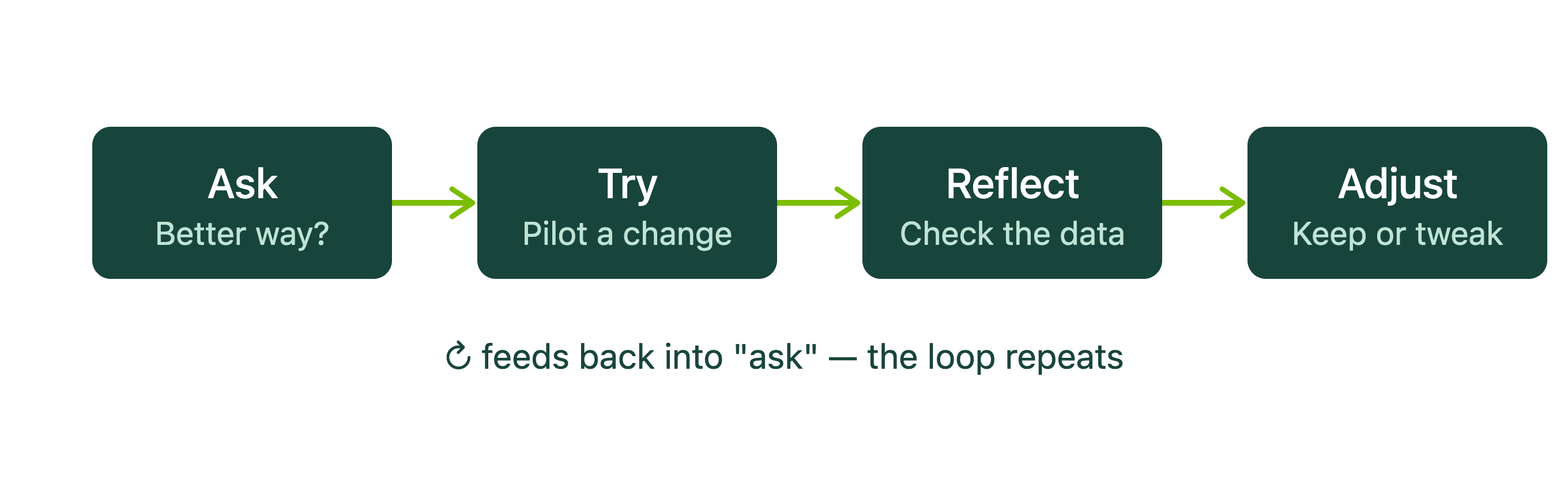
Continuous improvement works best as an ongoing habit, not a periodic special project. It's tempting to treat "improving how we work" as something that happens during a big initiative or an annual review, but the offices that actually get better are the ones where questioning current practice is just part of how the team operates day to day. As a supervisor, you help to set that tone.
A few ways to build that habit into your team:


Pulling caseload numbers, appointment trends, or survey feedback before making a change helps you tell the difference between a real pattern and a one-off frustration, and gives you something concrete to point to when you explain the change to your team.

Building this culture also depends on your own skills as a supervisor: facilitating change, coaching a team through it, and modeling the habit of reflection you're asking of others. Explore a range of resources for supervisor development below: